
Most people who take up running start stretching at the same time, because that is what you do to avoid getting hurt. It is the standard advice, repeated everywhere.
The largest controlled review of the question found that stretching does almost nothing to prevent injuries.
In 2014 the British Journal of Sports Medicine pooled 25 randomised trials covering more than 26,000 people. Stretching showed no meaningful effect on injury rates. Strength training, by contrast, cut the overall injury rate to under a third, and almost halved the slow-building overuse injuries that stop most new runners.
That is a wide gap between the thing most beginners do and the thing that actually works.
What the research compared
The review (Lauersen and colleagues, published in the British Journal of Sports Medicine) set the common injury-prevention methods against each other using controlled trials, which is the closest sport science gets to a fair test. You can read the abstract on PubMed.
The headline findings:
- Strength training reduced injuries to under a third of the rate in groups that did none.
- Overuse injuries were almost halved by strength work. These are the gradual aches, shin pain and sore tendons that build over weeks, exactly the kind beginners get.
- Stretching showed no significant effect on injury rates either way.
Stretching is not harmful, and it can feel good. It just does not do the job most people are using it for.
If your aim is to stay injury-free, the evidence points at building strength, not stretching.
Why strength training protects runners
Running is a long series of small impacts.
Every stride lands force through your feet, calves, knees and hips, and your body absorbs it stride after stride.
Stronger muscles and tendons tolerate that load better. When the tissue handling each landing is stronger, the impact takes a smaller share of its limit, and the slow accumulation of damage that becomes an overuse injury is less likely to cross the line.
This matters most in the first months, when your heart and lungs adapt faster than your tendons and bones do.
You feel fit before your structure has caught up, so you run more, and the injury arrives just as things were going well. Strength work narrows that gap.
One note before you start: this is general information, not medical advice. If you have an existing injury or health condition, have a word with your GP or a physiotherapist first.
Why it matters more after 50
Muscle mass declines gradually from the mid-30s onwards, a process called sarcopenia. It is not dramatic, and running slows it, but it means an older beginner starts with less of the tissue that protects the joints.
Strength training does two jobs at once here. It lowers injury risk, and it pushes back directly against age-related muscle loss. For a runner over 50, that makes it the single most useful habit to pair with the running itself.
The NHS already recommends muscle-strengthening activity on at least two days a week for every adult, alongside regular aerobic exercise.
Most people skip the strength half entirely. Runners have more reason than anyone to keep it.
How to start without a gym
You do not need a gym, a barbell, or much time. Two short sessions a week is the dose the guidelines ask for, and bodyweight is plenty to begin with.
A simple starting set, twice a week:
- Sit-to-stands from a chair, for the thighs and hips
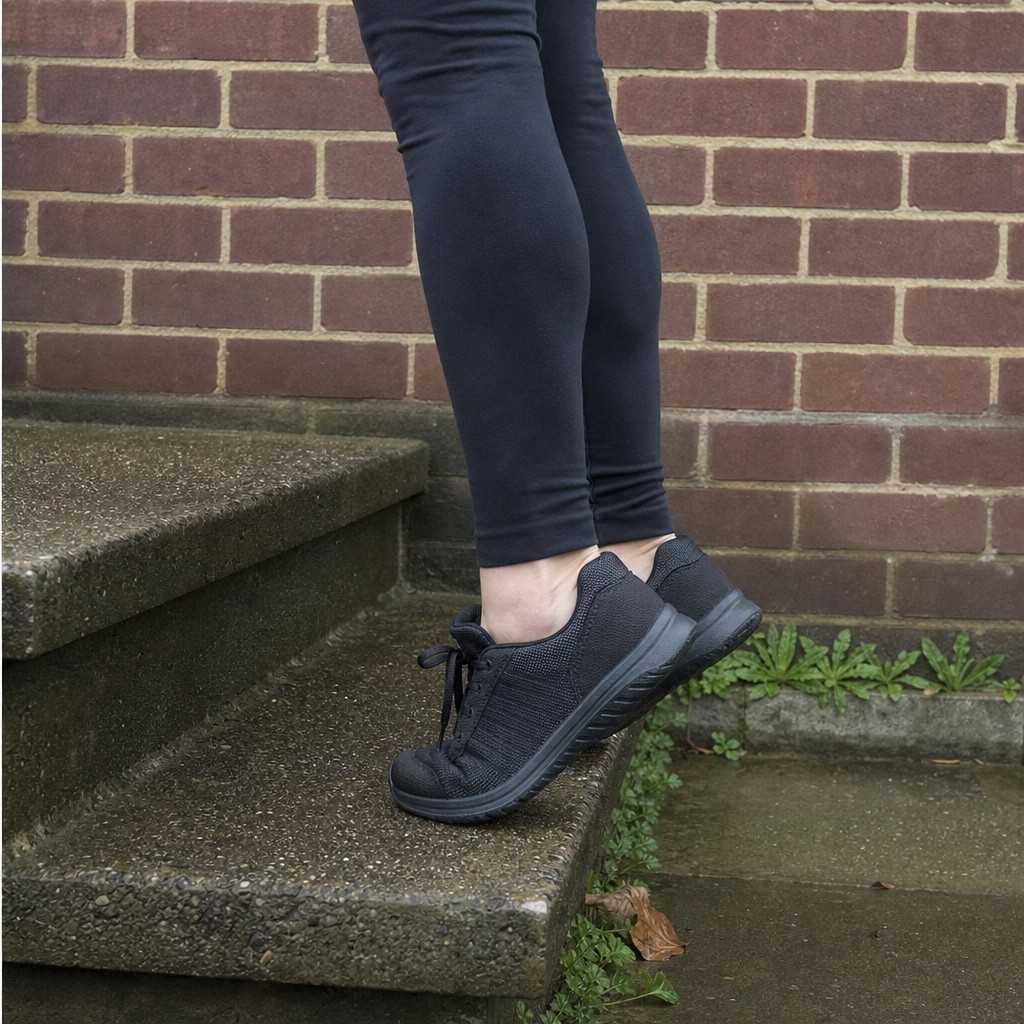
- Calf raises, slow up and slower down, for the lower legs that take the most running load
- Single-leg balance, such as standing on one leg while the kettle boils, for the small stabilising muscles
- Glute bridges, lying on your back and lifting the hips, for the muscles that drive each stride
Begin with one set of each, build to two or three over a few weeks, and stop well short of exhaustion. If you want to add a little resistance at home later, you can compare resistance bands on Amazon UK rather than buying heavier kit you may not stick with.
The takeaway
If you change one thing about how you protect yourself as a new runner, swap some of your stretching time for strength work. The evidence on that swap is about as clear as sport science gets.
Keep it boring and keep it regular. Two sessions a week, the same handful of simple movements, building slowly, will do more for your knees and shins than any amount of pre-run stretching.
For the wider picture, how to prevent common running injuries covers the other levers, and how to recover after a run explains why the rest between sessions does as much work as the sessions themselves. If you are starting later in life, starting running after 50 puts the strength piece in context.