
Most of what keeps you safe on a run is ordinary common sense, applied consistently. Being visible and being sensible covers the vast majority of it. This article is about building those habits, not about fear.
The one thing worth noting upfront: running in the UK means running in the dark for a significant chunk of the year. A November or January morning run starts before sunrise. An evening run ends after it. That single reality shapes most of the practical advice that follows.
Being seen in the dark
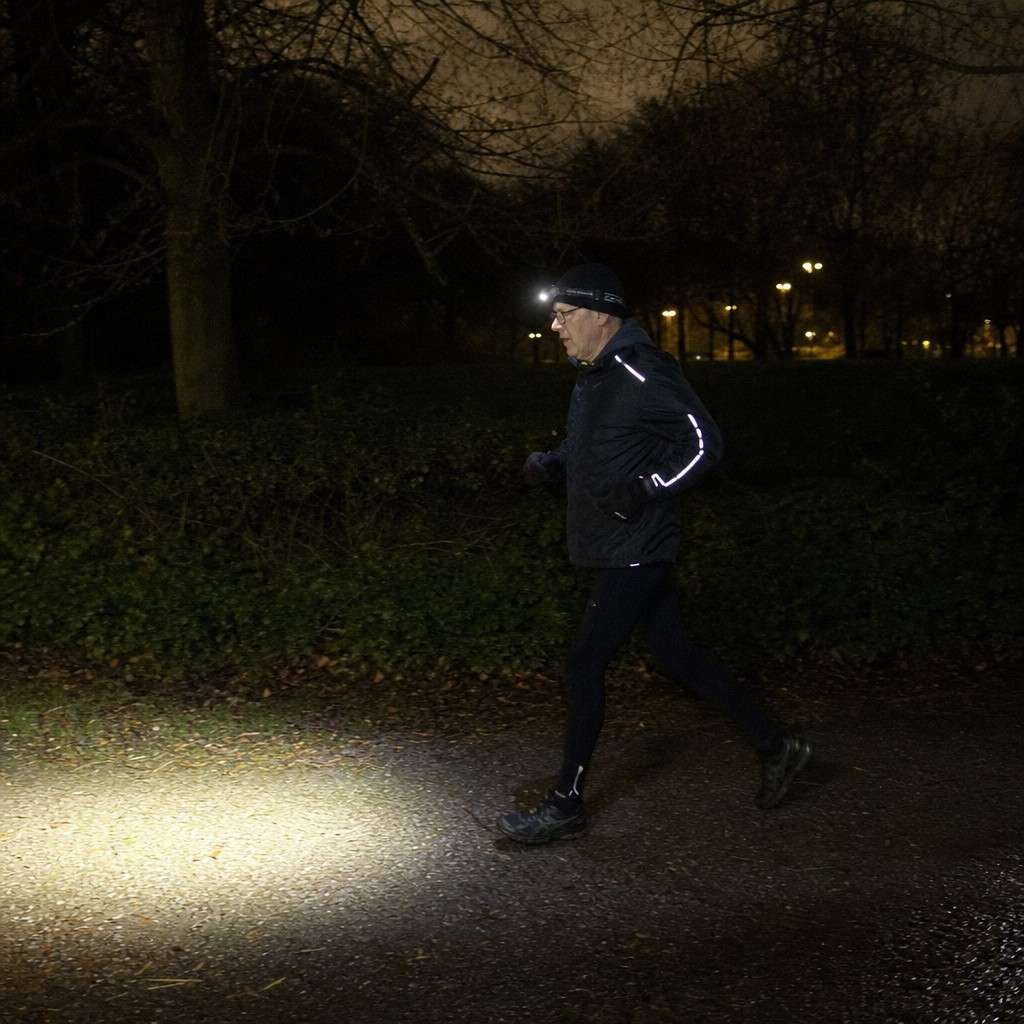
A hi-vis vest or jacket is the most useful piece of kit a UK beginner can own after a decent pair of trainers. You do not need to be a serious runner to be taken seriously by traffic. A bright strip visible at 100 metres is enough.
Reflective details help too, particularly on your arms and lower legs, which move and catch headlights better than a static torso. Many running jackets now have reflective piping built in.
On an unlit path, a canal towpath, or a country lane without street lighting, a head torch changes things. It shows you where to put your feet on uneven ground, and it makes you visible to anyone approaching. A decent one costs less than a round of drinks. You can compare hi-vis running gilets on Amazon UK to get a sense of the range.
A November or January morning run starts before sunrise. An evening run ends after it. That single reality shapes most of the practical advice that follows.
Roads, pavements, and where to run
Use pavements wherever they exist. That sounds obvious, but on some suburban routes it is easy to step into the road without noticing. Stick to the pavement even if the surface is uneven; a cracked pavement is easier to manage than traffic.
Where there is no pavement, the Highway Code is clear: walk and run facing oncoming traffic. On a road without a pavement, that means the right-hand side of the road, so you can see vehicles approaching. Drivers will see you later than you see them, which is reason enough to face them rather than rely on hearing them approach from behind.
Parks and traffic-free paths are the most comfortable option, especially early on. A route you know well feels safer than an unfamiliar one, and that matters for confidence as much as it matters for actual risk.
Route sense and telling someone
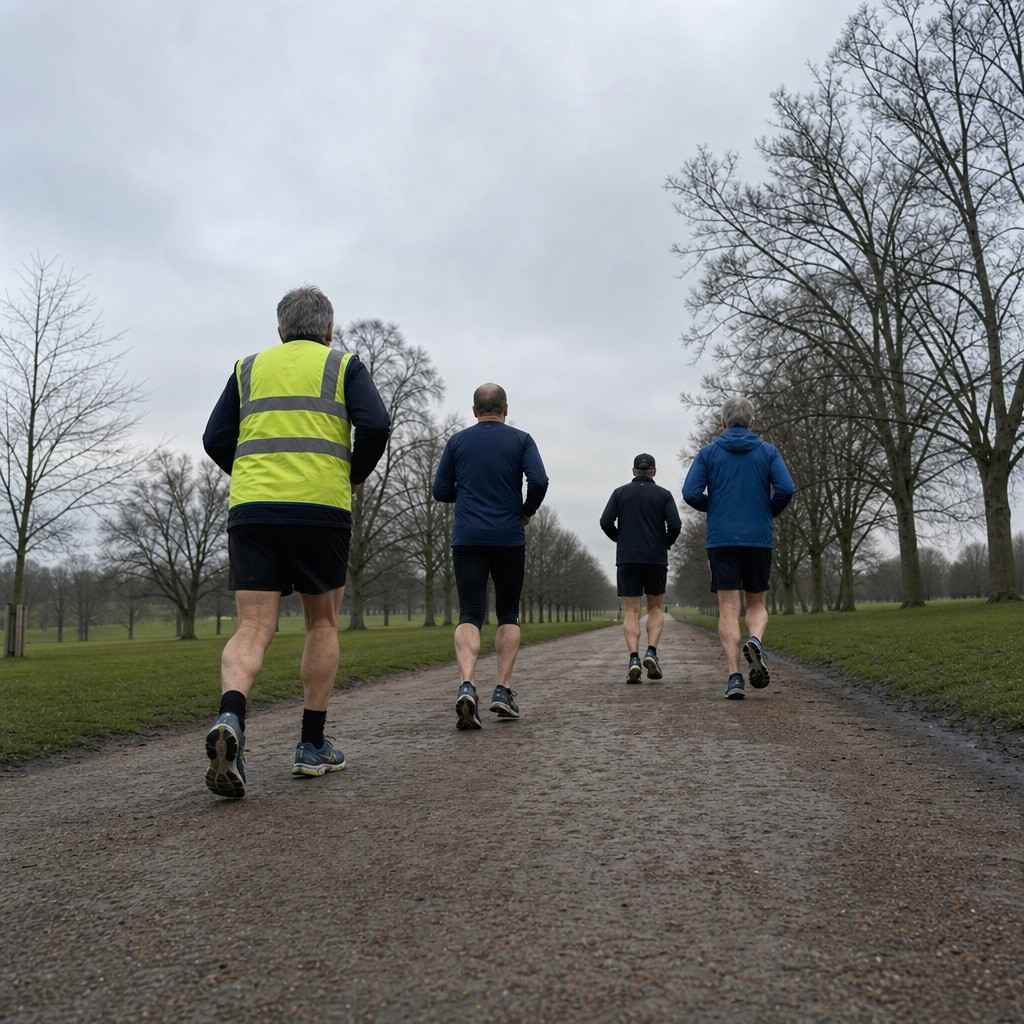
Before you go out, make a habit of letting someone know your route and roughly when you expect to be back. A quick message takes five seconds. For longer or more isolated runs, sharing your live location via your phone does the same job passively.
Carry your phone. This is worth stating plainly for beginners, because it can feel like an unnecessary addition to your kit. It is not. A sprained ankle two kilometres from home is manageable with a phone and awkward without one.
Stick to well-lit, populated routes while you are finding your feet. Town centres and park loops are good starting places. You can read more about picking a comfortable early route in how to choose your first running route.
Earphones and staying aware
Running with music or a podcast is one of the small pleasures of it. It is also the area where beginners underestimate the risk most often.
On roads and shared paths, one earphone out is the sensible default. You need to hear traffic pulling out, a cyclist calling behind you, or someone asking if you need help. Bone-conduction earphones are a popular alternative, because they sit outside the ear canal and leave ambient sound available.
One earphone out is the sensible default on roads and shared paths. You need to hear traffic pulling out, a cyclist calling behind you.
Running in a busy park or a residential street at 9 a.m. is different from running along an unlit towpath at 7 p.m. Adjust to the context rather than applying a single rule everywhere.
Ice, wet leaves, and surface hazards
British autumn and winter pavements can be genuinely hazardous in ways that don’t announce themselves. Wet leaves mat down and become near-invisible ice equivalents. A fresh frost on an unshaded path looks fine and feels like a skating rink underfoot.
These conditions warrant a different approach, not cancellation. Shorten your stride. Slow down more than you think you need to. Point your feet slightly outward on slippery ground to broaden your base. If conditions look borderline, treat it the same way running in difficult British weather asks you to treat an icy morning: if parkrun has cancelled, the ground probably isn’t safe.
It is worth building your first few months of running on routes where the surfaces are predictable. Tarmac paths and pavements beat rutted trails in autumn and winter for this reason alone.
parkrun and group running
A solo run at dawn on an unlit road is one of the higher-difficulty settings for a new runner, on the safety front and the motivation front. There is no rule that says you have to start alone.
The free Saturday morning parkrun at your local venue puts you in a group on a measured, marshalled course. Marshals stand along the route, so you are never more than a few hundred metres from someone who knows where you are. For beginners who feel uncertain about going out alone, it is an obvious starting point.
Local running clubs often have beginners’ groups too, and most are less intimidating than they look from the outside. A club’s beginner group typically runs at walk/run pace, which is exactly the method most useful for anyone starting after 50. Social running solves several problems at once.
Feeling safe keeps you consistent
This is worth saying plainly. A runner who feels uncertain about safety skips runs. Not consciously, not as a decision, but as a slow drift toward finding other things to do on dark mornings.
Sorting out a head torch, knowing your local well-lit loop, telling someone you’re going out: these are small one-time investments. They pay back in consistency, which is the only thing that makes you fitter over time.
None of this needs to feel complicated. Bright kit, a phone, a familiar route, one ear free. That is the practical shape of a safe UK beginners’ run, in almost any conditions.
For a structured approach to building your first weeks of running, how to start running with no experience covers everything from shoes to your first parkrun.