
Beginner running injuries are rarely freak accidents. Almost all of them are overuse injuries, with one cause: load arriving faster than the body can adapt to it.
The good news is that the prevention is also straightforward. It does not require special equipment, a complex programme, or exceptional willpower. It requires patience with your weekly mileage.
This is general information, not medical advice, so if you are concerned about a specific pain, speak to your GP.
The common beginner complaints
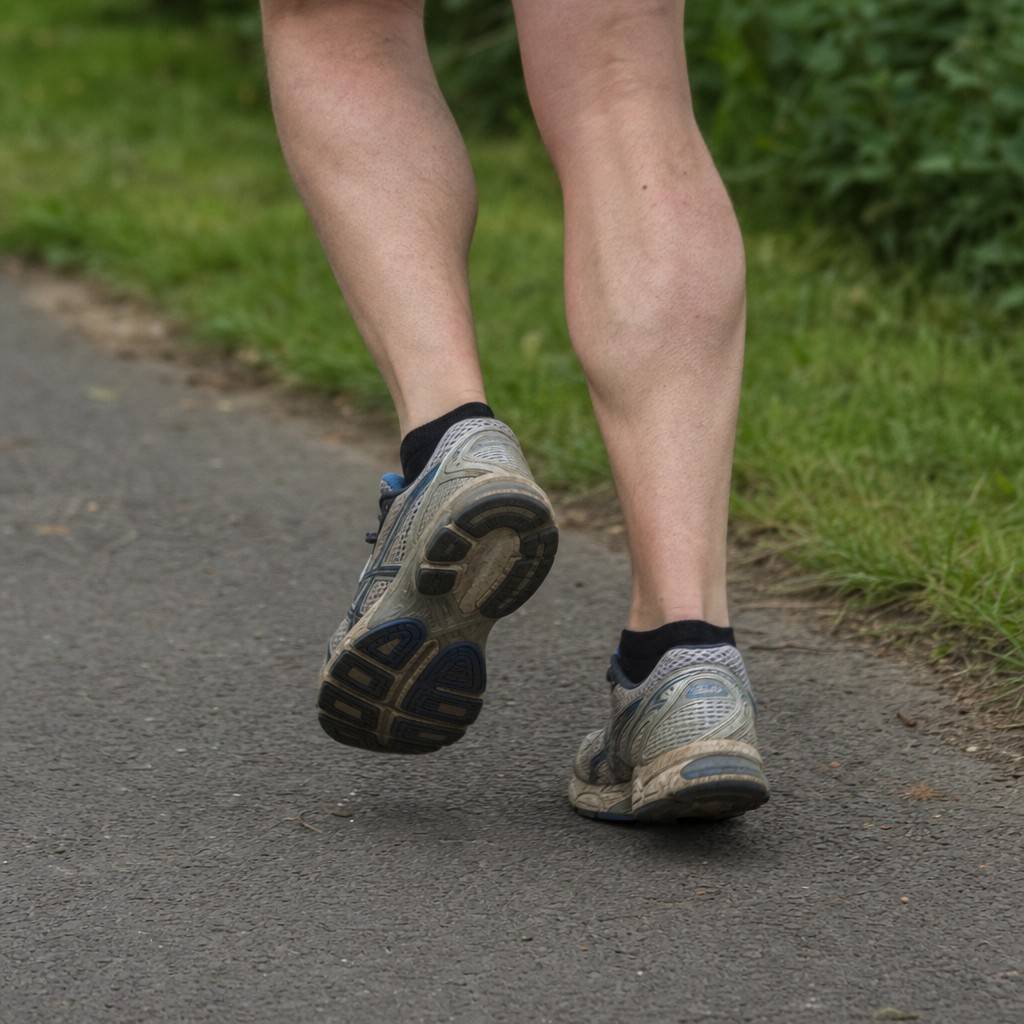
A handful of problems account for the majority of what new runners deal with in the first few months. Knowing what they feel like makes it easier to act early.
Shin splints is the catch-all name for pain along the inner edge of the shin. It is aching and diffuse, typically worst in the first few minutes of a run and sometimes still tender the next morning.
Runner’s knee presents as a dull ache around or behind the kneecap. It often builds during longer efforts and can linger going down stairs. For a deeper look at the knee specifically, the guide to running and your knees after 50 covers the long-term picture in full.
Achilles and calf tightness is common when runners add mileage quickly. You may feel stiffness in the lower leg first thing in the morning, or a tight pulling sensation at the back of the ankle during or after a run.
Plantar heel pain (sometimes called plantar fasciitis) is a sharp or burning pain on the underside of the heel, often worst with the first few steps after sitting or sleeping.
Knowing what each complaint feels like makes it easier to act early, before a two-day niggle becomes a two-month absence.
None of these is inevitable. All of them are far more likely when training load jumps faster than the tissue can handle.
Why it usually comes down to one thing
Muscle, tendon, cartilage and bone all adapt to running load, but they do not adapt at the same speed. Muscle responds within days. Connective tissue, the tendons and the fascia and the bone itself, takes weeks.
That gap is where most injuries happen. You feel fit enough to do more. The deeper tissues are not ready.
After 50, that gap widens. Recovery and adaptation simply take longer than they did at thirty. This is physiology, not a failing. It means the margin for doing too much too soon is smaller, and the case for patient progression is stronger.
Research published in the British Journal of Sports Medicine has consistently found that a rapid increase in training load is the single strongest predictor of overuse injury in recreational runners, more so than age, weight, or running surface.
The injury is usually the mileage spike, not the running itself.
The prevention toolkit
Progress gradually
The widely used guideline is to increase total weekly running by no more than ten per cent from one week to the next. If you run twenty minutes across three sessions this week, aim for no more than twenty-two next week.
This feels slow. It protects the tissue that is still catching up.
Use walk/run intervals
Spreading the load across a session matters as much as the total distance. Using walk/run intervals distributes impact far better than continuous running. One or two minutes of running followed by a walking break is not a compromise, it is the recommended method for beginners, particularly those over fifty.
The NHS Couch to 5K programme is built on exactly this principle. Its early sessions ask for sixty seconds of running at a time, and that is deliberate.
Walk/run intervals distribute load across a session far better than continuous running. That is not a stepping stone to the real thing. It is the method.
Build in rest days
Rest is when adaptation happens. Muscle, tendon and bone all rebuild stronger during recovery, not during the run.
After fifty, two rest days between sessions beats one, especially in the first couple of months. Connective tissue needs that time. Running every day does not speed progress; in most cases it slows it by accumulating load before the previous session has finished settling.
Run at an easy pace
Running too fast is a separate risk from running too far, but they compound each other. An easy pace means one slow enough to hold a full conversation without gasping. If you cannot speak in sentences, ease off.
Slower running reduces impact forces at the foot, ankle and knee. It also makes sessions recoverable, so you can train consistently rather than managing soreness. The reasons this matters are covered in more detail in the guide to running slowly for beginners.
Get your shoes fitted properly
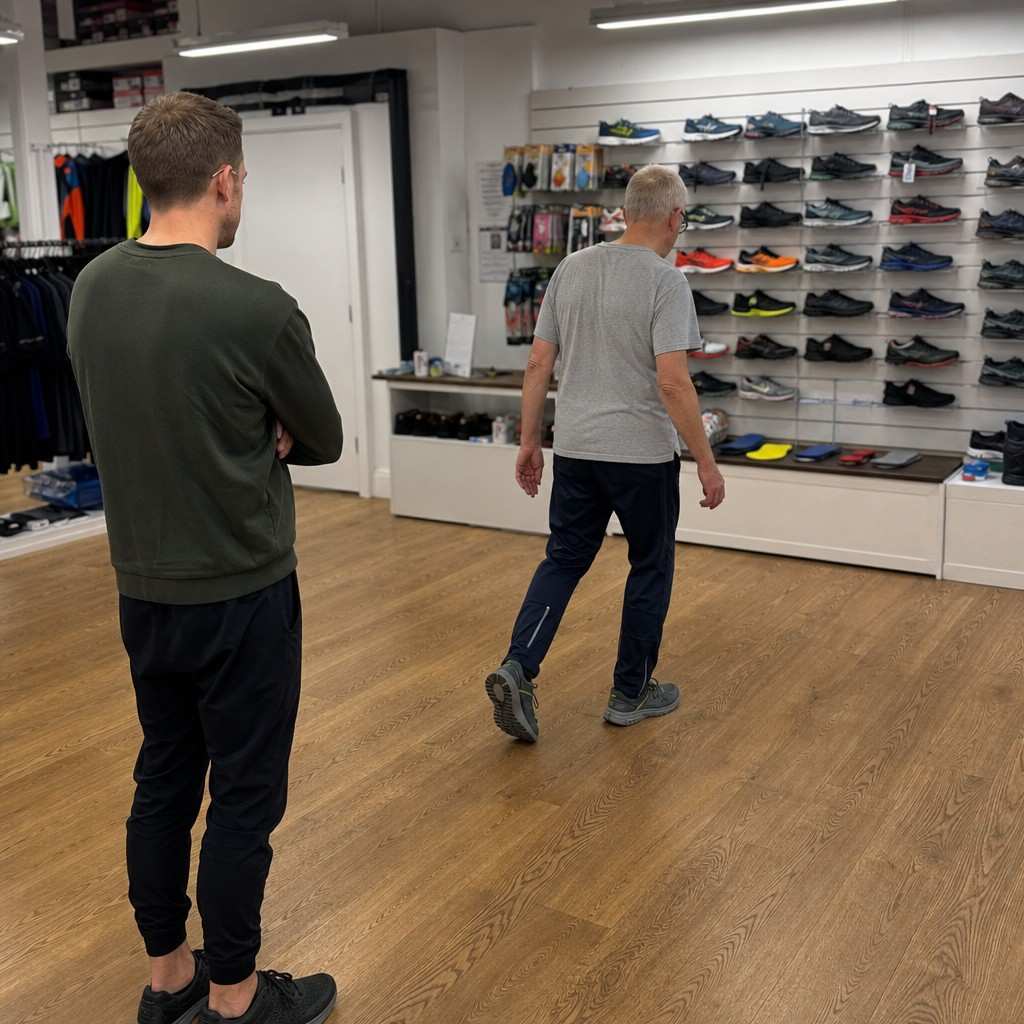
Shoes are not injury prevention in themselves, but the wrong shoe for your foot can add unnecessary load to ankles, knees and hips. A fitting at a proper running shop, where someone watches you walk and run, matches the shoe to how your foot actually moves. It costs nothing on top of the shoes and is worth more than any specification printed on the box.
If you want to browse options before visiting a shop, you can compare running shoes on Amazon UK. Treat it as research, not a substitute for the fitting.
Never buy running shoes based on a review alone. The fit matters far more than the brand or the cushioning level.
Add gentle strength and mobility work
You do not need a gym programme. A few minutes of calf raises, single-leg balances, and hip mobility work a couple of times a week supports the connective tissue without adding running load.
Calves and hips are the weak links for most over-fifty beginners. Addressing them gradually is an investment in staying uninjured, not a chore. It does not need to take more than ten minutes after a run.
Listening to early niggles
An ache that appears the day after a run and clears within two days is almost always ordinary muscle soreness. It is not a reason to stop. For a full guide to distinguishing normal post-run soreness from warning signs, see what post-run ache is normal and what is a warning sign.
The pattern to act on is pain that worsens as you run, or persists beyond three to four days. That is the body asking for a pause, not punishment.
Early rest almost always means a shorter break than ignoring the signal does.
When to see your GP or a physiotherapist
Most niggles respond to a few extra rest days and a reduction in mileage. Some do not.
See your GP or a physiotherapist if: pain lingers more than a week with no improvement; pain causes you to change how you walk; or the problem returns immediately every time you try again.
A physiotherapist can usually identify the load management issue quickly and give you a clear return plan. Most over-fifty beginners who see one are back running within a few weeks.
Running after 50 is safe and well-supported by the evidence. The conditions that lead to injury are well understood, and most of them are avoidable. For the bigger picture of what starting running after 50 actually involves, that article covers the physiological differences and how to work with them.