
The best first running route is probably already on your doorstep.
Most beginners spend time researching scenic trails or measured paths before they have even laced up once. That instinct is understandable, but it is backwards. A good first route is not beautiful or long. It is short, familiar, and easy to abandon.
Start within ten minutes of your front door
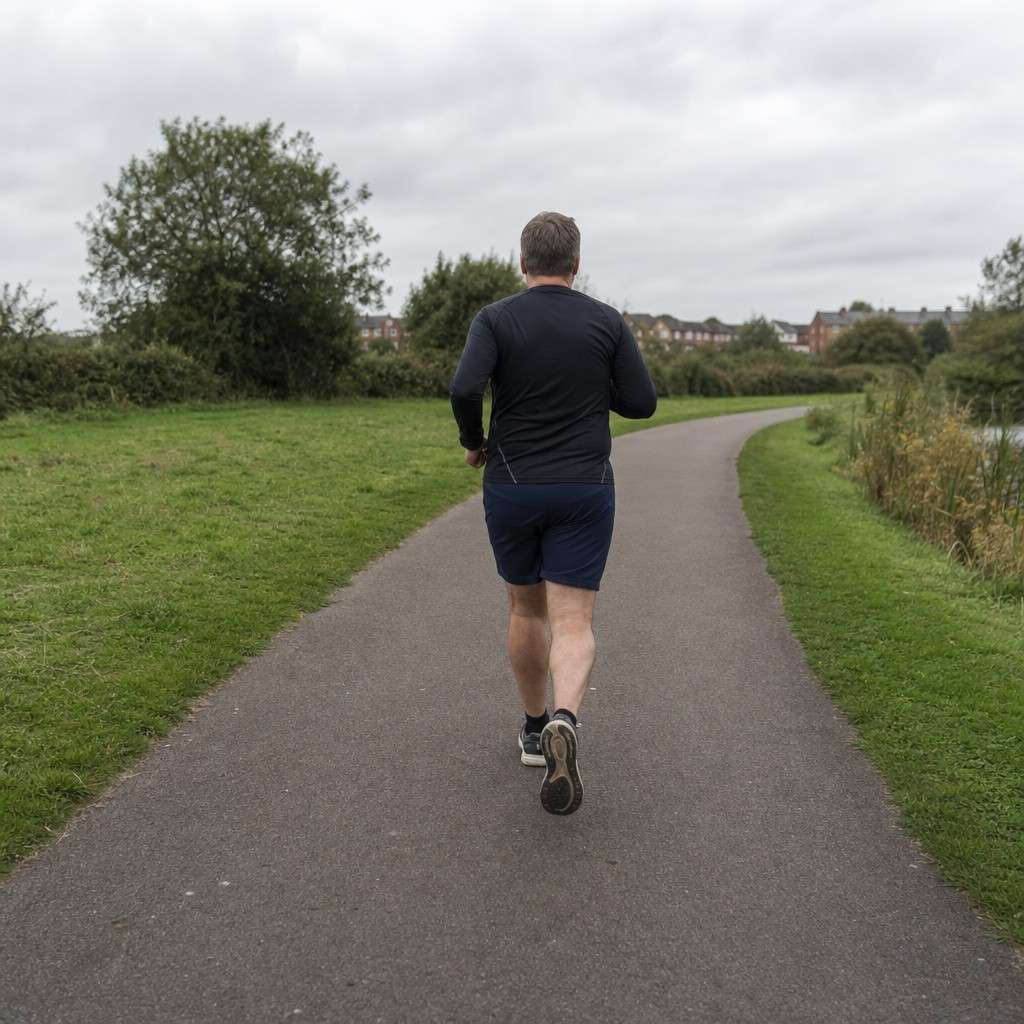
There is a practical reason for this, and it has nothing to do with laziness.
Your first few sessions will be shorter than you expect. Walk/run intervals cover a kilometre (about two thirds of a mile) or less in the opening weeks. A route that requires a fifteen-minute drive to reach adds friction before you even begin.
Keeping the route close also means you can cut it short without consequence. If something feels off at the five-minute mark, you walk home. That option disappears when you are three miles from the car park.
Find out what is within walking distance. A park, a canal towpath, a quiet residential street, a playing field. Start there.
Short loops over long out-and-backs
An out-and-back route sounds sensible on a map, but it has one persistent problem.
When you are a kilometre out, you are a kilometre from home. If your legs give up earlier than planned, or the weather turns sharp, that kilometre is non-negotiable. A short loop solves this neatly: you are never more than five minutes from your front door.
A 400-metre loop around a park, repeated two or three times, is a perfectly reasonable first session structure. It feels repetitive on paper. In practice, you barely notice, because in the early weeks concentration is on breathing and pacing, not scenery.
A 400-metre loop around a park, repeated two or three times, is a perfectly reasonable first session structure.
For the walk/run interval method that works best on these loops, how to start running with no experience covers the full first-four-weeks structure.
Choosing your surface
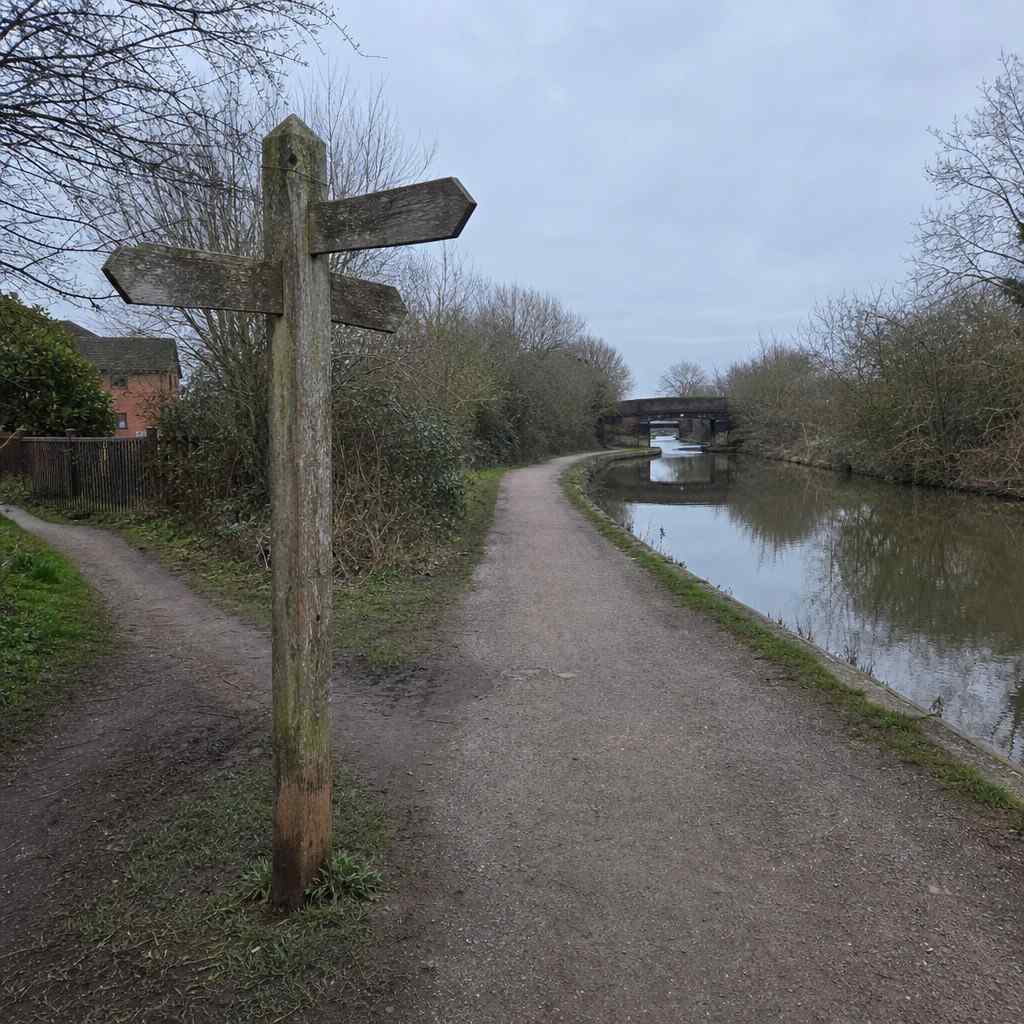
Not all surfaces treat new legs equally.
Firm pavement is predictable. Your foot lands the same way each time, which makes it easier to settle into a rhythm and notice how your body feels. Most beginners start on pavement and stay there.
Park paths and canal towpaths offer a slightly softer landing without the unpredictability of rough ground. Grass is gentler still on joints, but uneven grass, especially after rain, adds ankle-wobble that a new runner does not need in the first fortnight.
Very hard surfaces like concrete paving slabs or cobbles are worth easing into rather than leading with. Connective tissue adapts to repeated impact, but that adaptation takes time. Starting on a mix of pavement and park path gives a reasonable middle ground.
Loose gravel paths and uneven trail surfaces are worth leaving for later. Not because they are dangerous, but because managing the surface takes attention away from managing the run. One thing at a time.
For a fuller look at how surfaces affect joints as you build up, see will running ruin your knees after 50.
Lighting and visibility on dark UK mornings and evenings
If you are running before 8am or after 4pm between October and March, visibility matters.
Wear something bright, even on quiet streets. A high-vis vest or a light-coloured top costs almost nothing and makes a real difference to drivers at junctions. A head torch is worth considering if your route takes you through parks or any unlit section.
Running in the dark is not something to avoid. It is something to prepare for briefly, and then get on with. Thousands of UK runners do it every morning before work.
If lighting for early runs is on your list, you can compare running head torches on Amazon UK before committing to anything.
Quiet routes for the self-conscious beginner
The social anxiety around running in public is real, and it is worth taking seriously rather than brushing aside.
Many beginners feel watched, slow, or out of place on busy paths. That feeling fades, but it is not imaginary in the early weeks, and choosing a quieter route removes a friction that can quietly derail the habit before it forms.
Early mornings are the closest thing to a privacy window in UK running. A residential street at 7am on a Sunday, a canal towpath on a Tuesday morning, a park just after it opens. Fewer people, less noise, and the handful of regulars you do pass are focused on their own session.
This is general information rather than medical advice. If anxiety about exercising in public feels like a significant barrier, a word with your GP is worth having.
Using a parkrun course as a ready-made route
Every parkrun course in the UK is a free, measured, clearly marked 5K (just over three miles).
You do not need to run on a Saturday to use it as a training route. Most courses through parks are public paths, open any day of the week. Walking the course once mid-week before your first Saturday attendance gives you an accurate sense of distance, terrain, and any hills involved.
The map for each event is on the parkrun website under the individual event page. There are more than 800 UK locations, so there is almost certainly one within a few kilometres. If you want to know what the Saturday event itself looks like as a beginner, what to expect at your first parkrun covers it in detail.
Your nearest parkrun course is a free, measured 5K you can walk any day of the week, with no sign-up needed outside Saturdays.
Where to find routes
You do not need to plan anything elaborate. Three practical options cover most beginners.
Start with what you already know. The park you walk the dog in, the route to the shops, the path around the playing field. Familiarity removes one variable.
For something measured, parkrun event maps are the cleanest free option for a known-distance loop in a park setting.
Ordnance Survey maps, via the OS Maps app, show footpaths and towpaths in detail across the UK. They are useful for finding quieter alternatives once you have outgrown the obvious local loop. The free version covers basic path-finding.
The goal in the first month is not to find the optimal route. It is to find one that you will actually use. A slightly imperfect route you run three times a week beats a perfect one you are still researching.
Build in a bail-out option
Every session in the first few weeks should have a clear early-finish point.
Before you leave the house, decide what the short version looks like. If the planned session is three loops of the park, the two-loop version is the bail-out. No negotiation needed at the time, no sense of failure. You just take the short version and go home.
Beginners who injure themselves in the first month almost always pushed through a signal they had already noticed. Starting running after 50 has a fuller account of how connective tissue adapts and why early sessions are not the place to test your limits.
The bail-out option is not for the days you feel fine. It is for the days you need it. Having it ready in advance means you will use it when it matters.