
Most people who struggle to run further are not short on willpower. They are short on aerobic base, and trying harder is not how you get more of it.
Endurance builds through frequency and easy effort over weeks, not through pushing past your limits in a single session.
What endurance actually is
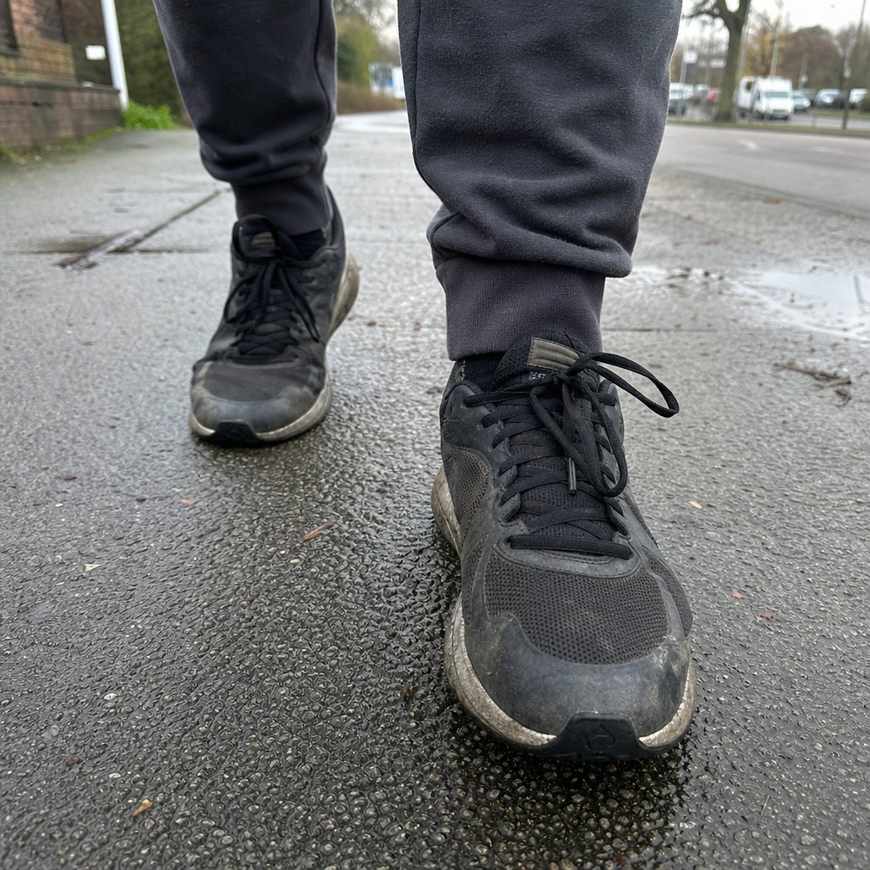
Running endurance is, at its core, your aerobic system’s capacity to keep supplying energy over time. That capacity sits in the mitochondria of your muscle cells. At low effort, regular running stimulates those cells to multiply and become more efficient at using oxygen and fuel.
This process works at any age. According to the NHS, regular aerobic exercise in adults over 50 measurably improves cardiovascular capacity, and that improvement comes from consistent moderate effort, not from training at the edge of what you can manage.
There is no shortcut to this adaptation. It takes weeks, not days, and it does not respond well to urgency.
Why easy effort is the mechanism, not the method
Running at an effort where you can still hold a conversation is not taking it easy. It is specifically the intensity that builds your aerobic base.
Go harder than that, and you spend most of the session in what exercise physiologists call the grey zone: too fast to develop aerobic efficiency, too slow to deliver the gains that come from genuinely hard efforts. Progress stalls, legs feel heavy, and nothing gets easier. Most people in that position quietly conclude running is not for them.
The conversation test is the method. Speak a full sentence out loud. If you can, the effort is right. If you cannot, slow down.
For more on why the slower pace produces better results, why beginners should run slower than they think explains the physiology in detail.
Running at an effort where you can hold a conversation is not taking it easy. It is specifically the intensity that builds your aerobic base.
Walk/run intervals and why they work
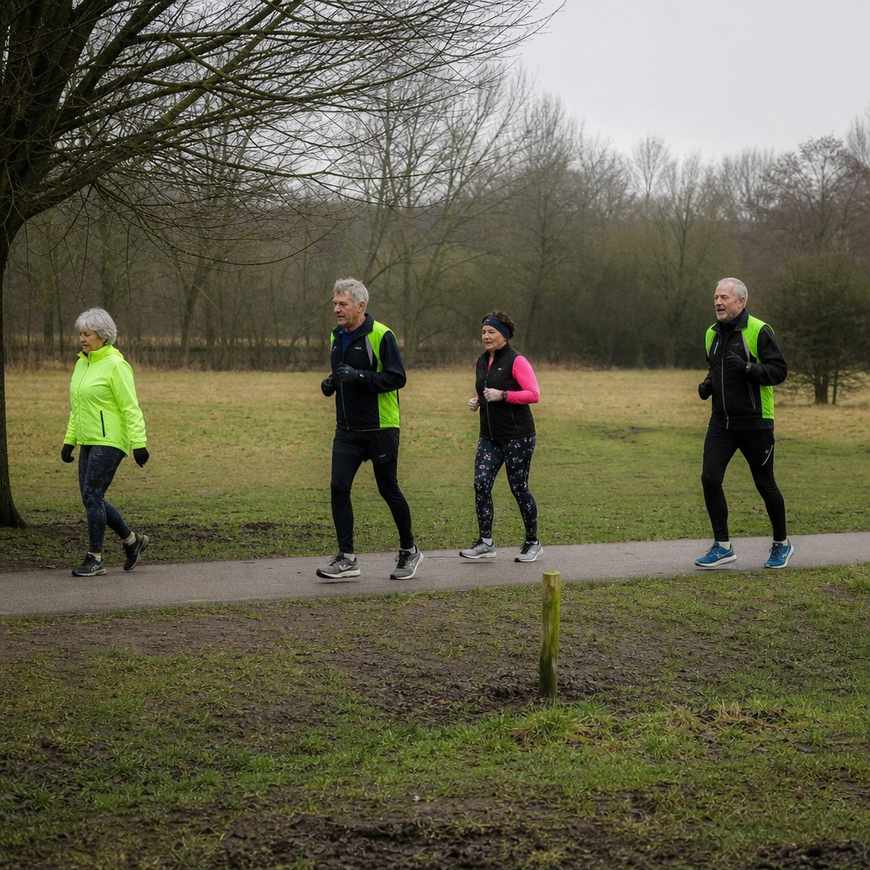
Walk/run intervals are not a stepping stone to real running. They are the recommended method for building endurance, and the case for them is particularly strong over fifty.
When you add running gradually into a walk, your heart rate stays in the productive zone. Your tendons and cartilage, which adapt more slowly than muscle, get the work they need without being overloaded. You finish the session having banked genuine aerobic adaptation, with enough left to recover in time for the next one.
Those walking minutes are not dead time. They are what lets the running minutes count.
A straightforward structure: alternate one minute of easy running with two minutes of walking, for twenty to thirty minutes, two or three times a week. That is enough to move the adaptation forward. The complete guide to starting running with no experience covers the full first-month plan if you need the week-by-week shape.
Time, not pace
When you want to go further, extend the time you are out, not the speed you move at.
Running for an extra five minutes at the same easy effort is an endurance gain. Covering the same distance faster is a different kind of work entirely, and it is not what builds the base. The measure that matters in these early weeks is time on your feet, not distance or pace.
On the question of how much to add, the widely used guideline from British Athletics is to increase weekly running time by no more than roughly ten per cent from one week to the next. Add too much at once and you outpace the structural adaptation happening in your tendons and connective tissue, which is exactly where overuse injuries begin.
After 50, that ten per cent figure deserves particular respect. Connective tissue adapts more slowly with age, and it cannot signal distress clearly until the load is already too high.
Connective tissue adapts more slowly with age, and it cannot signal distress the way muscle does. The ten-per-cent guideline is not caution for its own sake. It is the recovery timeline.
Rest and recovery are part of building endurance
Rest days are not the space between the training. They are where the training lands.
Your muscles, tendons and bones do their rebuilding between sessions, not while you run. This is why adding more sessions too quickly backfires: you are removing the time the body needs to do the actual adaptation work.
After 50, two rest days between sessions beats one in the first month. This is ordinary physiology, not a limitation to push through. If you have any health concern about starting, speak to your GP before you begin. This is general information, not medical advice.
A practical shape for a week might look like three sessions, each separated by at least a full day off. The considerations specific to starting after 50 cover the recovery picture in more depth.
Consistency beats heroics
One long, hard effort per week does less for endurance than three moderate ones. The aerobic system adapts to frequency. It builds on what arrived before.
Showing up regularly at an easy pace is the most productive thing a beginner can do. A grey Wednesday run matters more than an ambitious weekend session that leaves you needing four days off.
At a Saturday parkrun, the 5K (just over three miles) route is a straightforward way to put a consistent, low-pressure structure around your training. The event is free, every UK location has a marked 5K, and there is no minimum pace. Walk/run the whole thing and it still counts. Running a continuous 5K is one natural milestone to work towards, but getting round consistently, however you do it, is the better target in the first few months.
How to know it is working
The signs that your endurance is improving are not dramatic. They are ordinary, and they take a few weeks to appear.
The most reliable sign: the same route feels easier than it did a fortnight ago. Not fast, not impressive. Just noticeably easier.
Other markers worth watching for: you need less recovery time between sessions, walking intervals feel genuinely restorative rather than necessary, and you finish a run able to speak in full sentences without waiting.
None of these require a GPS watch or a heart rate monitor. The conversation test measures the same thing more directly. If talking feels easy at a pace that used to leave you breathless, your aerobic base is building.
For a wider picture of how pace fits into all of this, running pace for beginners is a useful companion read once you have a few weeks of consistent sessions behind you.
Progress at this stage is not always visible from the outside. It is happening inside, in the small structural changes that will eventually let you go further than you can today.