
“How slow is too slow?” is one of the most common questions new runners ask. The short answer is: at the start, there is no such thing as too slow.
Pace is an output of consistent easy running, not a target you set in advance.
This piece explains what pace means in plain terms, why most beginners run too fast, and what to watch instead of a number on a screen.
What pace actually means
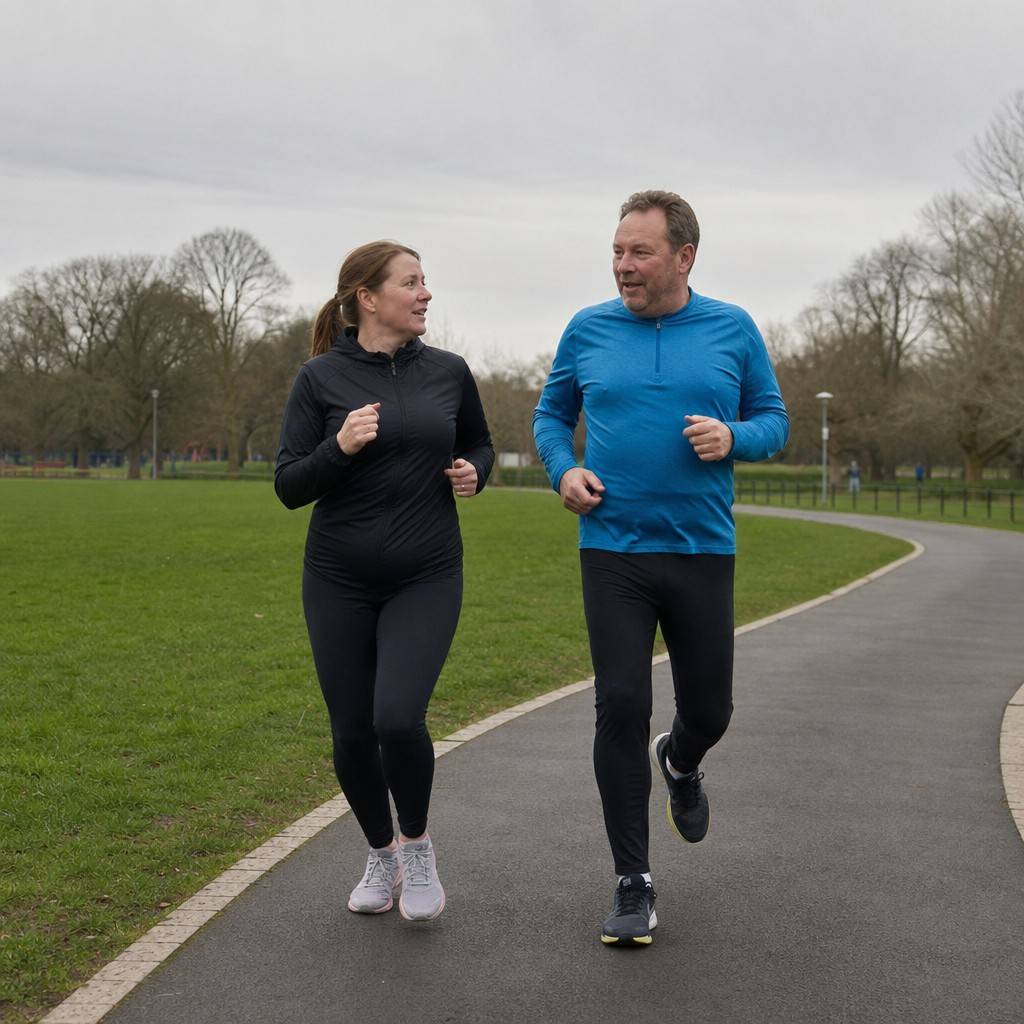
Pace is simply how long it takes you to cover one kilometre or one mile. That is the whole definition.
Most running apps show pace in minutes per kilometre (min/km) or minutes per mile (min/mile). The UK running world uses both. A parkrun is 5 kilometres (just over three miles), and races are often measured in miles.
A pace of 8 min/km is roughly 13 min/mile. A pace of 6 min/km is roughly 9.7 min/mile. Those numbers tell you nothing useful at this stage, though. The question is not whether your pace is fast or slow by some external standard. It is whether you are running at the right effort for where you are right now.
Pace is simply how long it takes to cover one kilometre or one mile. The question is not whether that number is fast enough. It is whether you are working at the right effort.
The one test that matters more than any number
The most reliable way to gauge your effort costs nothing and needs no device.
Speak a full sentence out loud while you are running. If you can do it without gasping, you are in the right zone. If you cannot finish the sentence, you are going too hard.
Exercise physiologists call this the talk test, and it corresponds closely to the aerobic intensity at which beginners build fitness most efficiently. It is also forgiving: you do not need a heart rate monitor, a GPS watch, or a specific pace target. Your own voice tells you.
According to the NHS, moderate aerobic exercise should allow you to hold a conversation but leave you breathing faster than normal. That is the zone. Run there.
Why most beginners run too fast
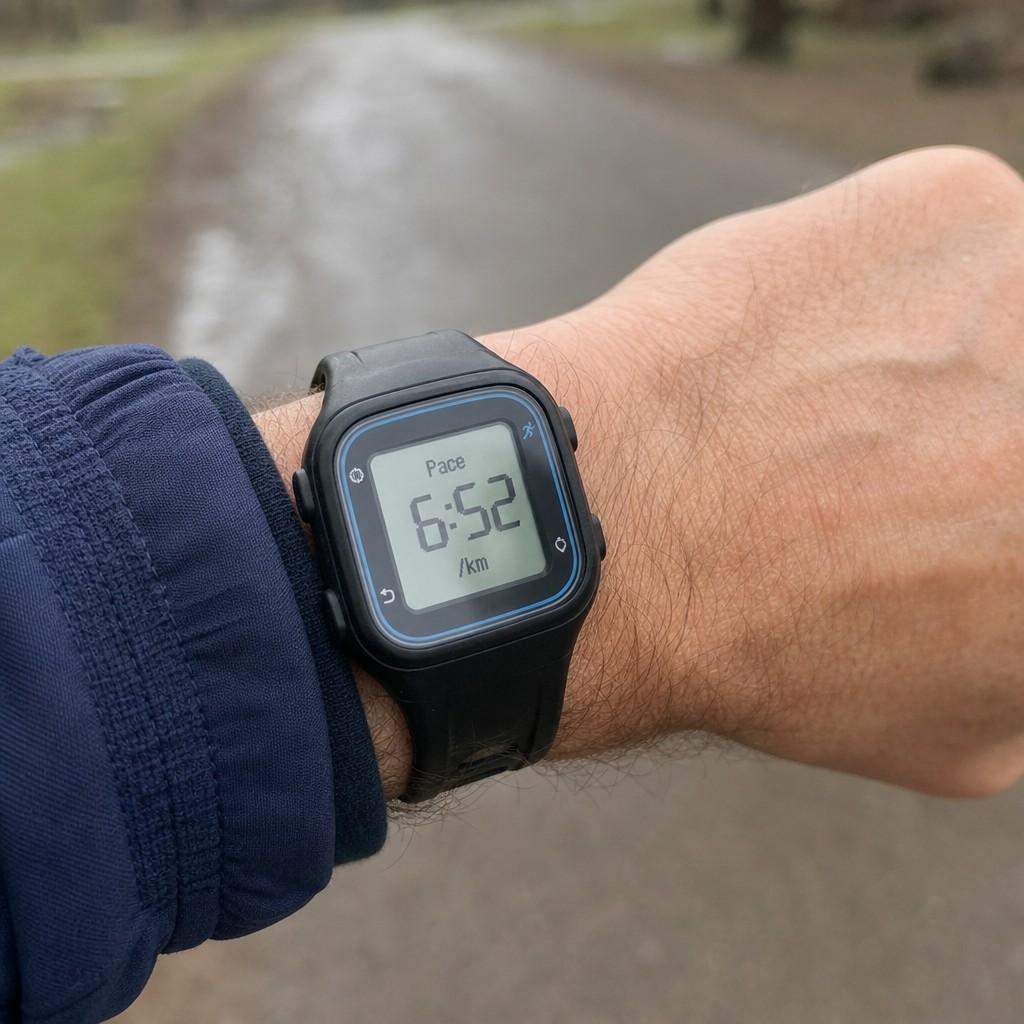
The pace that feels honest and productive usually is not.
When you push a bit harder, breathing rises, effort is obvious, and something seems to be happening. The instinct is to stay there because backing off feels like giving up.
That middle-hard effort is the least useful place to be. It is too fast to build your aerobic base efficiently and too slow to produce the gains that come from genuinely hard training. Exercise physiologists have a name for it: the grey zone.
If you want a deeper look at the physiology behind this, the case for running slower than feels right goes into why the grey zone stalls progress and what the easy pace actually does to your aerobic system. This article focuses on measuring and understanding pace; that one makes the argument for backing off.
The pace that feels honest and productive usually is not. The instinct to push a bit harder feels like the right choice, but it puts you in exactly the wrong zone.
How walk/run intervals solve the pace problem
For most beginners, running slowly enough to pass the conversation test while maintaining any pace at all is difficult in the first few weeks. Heart rate climbs quickly. Within a minute or two the effort drifts into that awkward middle place.
Walk/run intervals are not a workaround. They are the recommended method. A minute of running followed by two minutes of brisk walking, repeated for twenty to thirty minutes, keeps each running segment in the right zone. Those walking breaks are doing real work, holding each running segment at the right effort.
This structure also makes pace self-regulating. When the effort rises, you walk. When you run, you stay where the conversation test passes. No watch setting required.
For the full week-by-week structure, how to start running with no experience covers your first sessions through to your first 5K.
Why comparing your pace to others does not help
You will see pace figures in online forums, running apps, and at the finish of a parkrun. Some of those numbers will look fast compared to where you are.
Comparing your pace to other people’s is genuinely unhelpful. A 60-year-old who has been running for three years at 7 min/km has three years of aerobic adaptation behind that number. A 24-year-old who ran at school has a different physiological starting point.
Comparing your current pace to your pace from twenty or thirty years ago is equally unreliable. Aerobic capacity declines with age and recovers with training, but the recovery curve is not a straight line back to wherever you were before.
The only useful comparison is you versus you, week over week. On that scale, you will see movement within a few months without ever trying to force a specific number.
If you are coming to this in your fifties or sixties, starting running after 50 is worth a read for what physiologically changes and why your first few weeks look different from a younger beginner’s.
Pace improves on its own
This is the part that tends to surprise people.
Your pace will improve without targeting it. As your aerobic fitness builds, your body becomes more efficient at converting oxygen and fuel into movement. The same effort produces more speed. The conversation-test pace that felt slow in week two covers more ground by week ten, without any change in how hard you are working.
Runners who spend those early weeks chasing a specific number almost always run at the wrong effort. They either slow down artificially when the test says they are fine, or push past the conversation limit because they feel they should be hitting a target. Both delay the adaptation they are trying to build.
Run by feel. Check the conversation test. Trust the process. The pace number is a description of where you are, not an instruction.
Watching this happen over a few months is one of the more satisfying parts of getting started. What felt like a slog in week three starts to feel almost easy. That is aerobic fitness arriving on its own schedule, which it will do if you let it.
This is general information rather than medical advice. If you have a health condition or concern about starting, speak to your GP first.
If you want to track your easy runs and see your pace improve over time, you can compare basic running watches on Amazon UK. A simple GPS watch is useful for seeing your pace data, though the conversation test gives you the same information without any kit at all.
For what to expect in your first month of running, including how pace and effort typically change week to week, the first month of running covers the usual landmarks and surprises. And for the question of whether easy running will hurt your knees, will running ruin your knees after 50 has a direct answer.