
No. For most people, running does not ruin healthy knees, and being over 50 does not change that answer.
The fear is common, and the long-term research does not support it.
That belief stops more capable people from starting than almost anything else. So here is what the evidence actually says, and how to begin without giving your knees a reason to complain.
Does running wear out your knees?
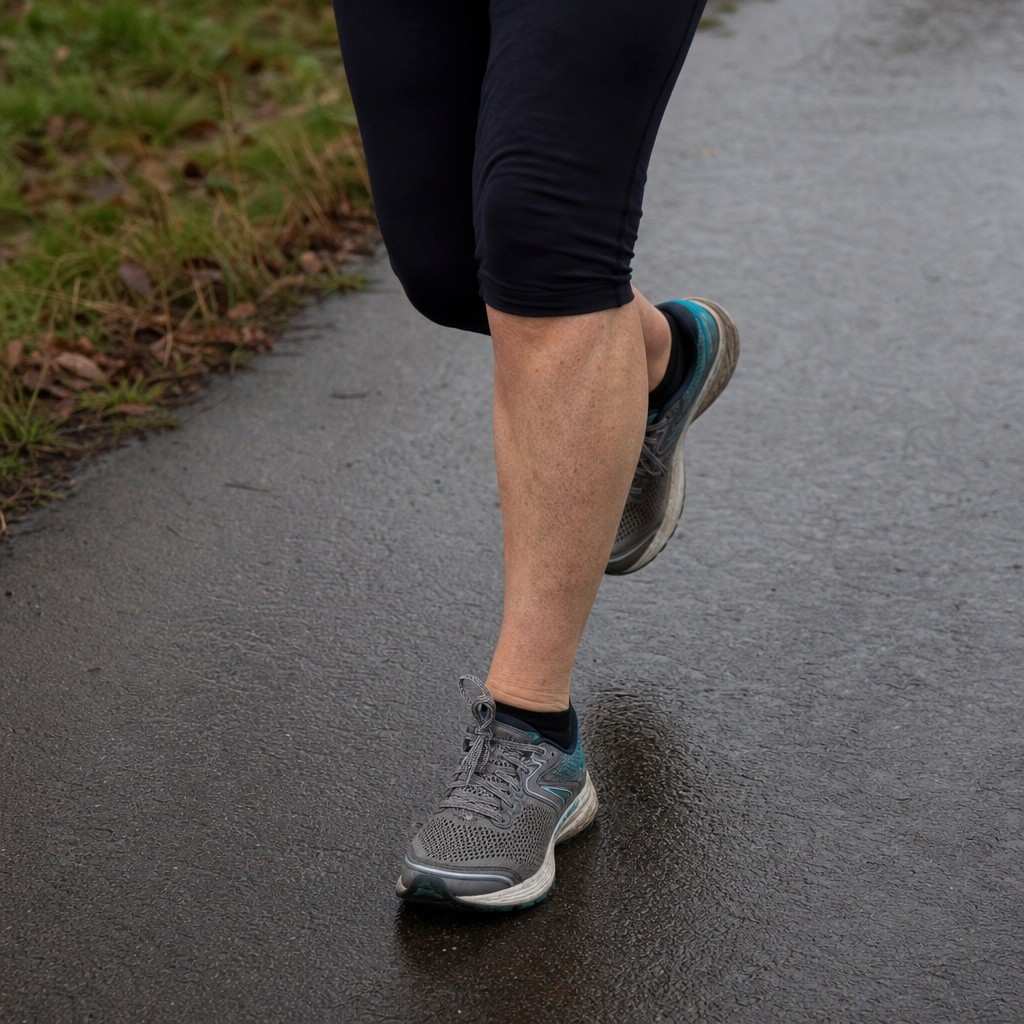
The worry makes intuitive sense. Running loads the knee, so more running should mean more wear.
The body does not work that way.
Cartilage is living tissue. It responds to regular, moderate load by staying healthy, much as muscle and bone do.
Load it sensibly and it adapts. Leave it idle and it does not improve.
Versus Arthritis, the UK’s main arthritis charity, notes that recreational running has not been shown to cause knee osteoarthritis. Long-term studies of recreational runners tend to find lower rates of knee arthritis among them than among people who do not run at all.
The picture only shifts at the extremes. Elite athletes running very high mileage for years are a different case from a beginner building up slowly.
Almost no one starting after 50 is anywhere near that territory.
Then why do beginners get knee pain?
Because of how they start, not because they run. This is the part worth understanding.
Most beginner knee pain comes from ramping up too fast, not from running itself. Cartilage and tendons adapt well to load when that load grows gradually. They protest when it jumps.
Add a few minutes of running each week, and your knees are not at risk. Try to run 5K, just over three miles, every single day in week one, and they may be.
Add a few minutes of running each week, and your knees are not at risk. Try to run 5K, just over three miles, every single day in week one, and they may be.
The same principle sits behind the advice to run slower than feels natural at first, which protects the joint while your fitness catches up.
Connective tissue is the limiting factor. Tendons, ligaments and cartilage adapt more slowly than muscle, and that gap widens with age. Your legs can feel ready before the structures around the knee actually are.
Normal soreness or a warning sign?

Some discomfort when you start is normal. Learning to tell ordinary soreness from a real problem keeps you running safely.
General muscle soreness in the day or two after a run is usually nothing to worry about. It sits in the muscle rather than the joint, feels dull, and eases as you move around.
Pain inside the knee joint is different.
Sharp pain, swelling, pain that worsens mid-run, or pain that lingers for days deserves attention. So does any pain that changes how you walk.
This is general information rather than medical advice, so if a knee pain worries you, speak to your GP. For more on telling the two apart, see our guide on what post-run ache is normal and what is a warning sign.
How to protect your knees as a beginner over 50
The method is simple, and the margins matter more than they did at 30.
Walk first. Two or three brisk thirty-minute walks a week, for a fortnight, give tendons and cartilage a gentle introduction before any running begins.
Then add running in small intervals. One minute of easy running followed by two minutes of walking, repeated for twenty to thirty minutes, is plenty at the start.
Keep each running minute slow enough to hold a conversation.
Walk/run intervals are not a compromise. They are the recommended method for beginners, especially over 50. There is no rule that says you must run continuously.
The NHS Couch to 5K plan is built on exactly this gradual approach, and no early session asks for continuous running. At any Saturday parkrun you will see people over 50 walking and running the whole 5K on grass and pavement, and finishing perfectly well.
Grow your weekly total by no more than about ten per cent from one week to the next. After 50, two rest days between runs beat one in the first month. The adaptation that protects your knees happens on the rest days, not during the run.
If tight calves or quads leave you stiff between sessions, you can compare foam rollers on Amazon UK to ease them at home. It is a small comfort aid, not a requirement.
Shoes that suit your stride help as well. A fitting at a proper running shop, where someone watches you move, is worth more than any feature printed on a box.
The fitting matters more than the brand.
When to see your GP
Most people can start running safely. A quick check first is sensible in some cases.
Speak to your GP before you start if you have an existing knee problem, a diagnosed joint condition, or a previous knee injury or operation. The same applies if you have not exercised in several years.
For most people that conversation is short and reassuring. It exists to catch the few situations where a tailored approach helps, not to talk you out of running.
Where this leaves you
Starting running after 50 is safe and well-supported by the research, but recovery takes longer than it did at 30, and that is normal physiology. Your knees are far more capable than the worry suggests.
Start slow, build gradually, and give the rest days the respect they deserve.
When you are ready for the week-by-week structure, how to start running with no experience walks you through your first session to your first parkrun. If you are weighing up the wider picture of starting later, what the research says about running after 50 is a good companion read.
Your knees are far more capable than the worry suggests. Start slow, build gradually, and give the rest days the respect they deserve.
Healthy knees do not break because you took up running. They struggle when running arrives too fast, and that part is entirely in your hands.