
It is a November morning. Eight degrees, a thin drizzle, dead leaves on the pavement. Most people look at that through the window and decide to go tomorrow instead.
The runners heading out are not tolerating those conditions. They have worked out what to wear. The biggest mistake British beginners make is not going out in the rain. It is overdressing, overheating, and then deciding running in the UK is miserable.
The overdressing problem
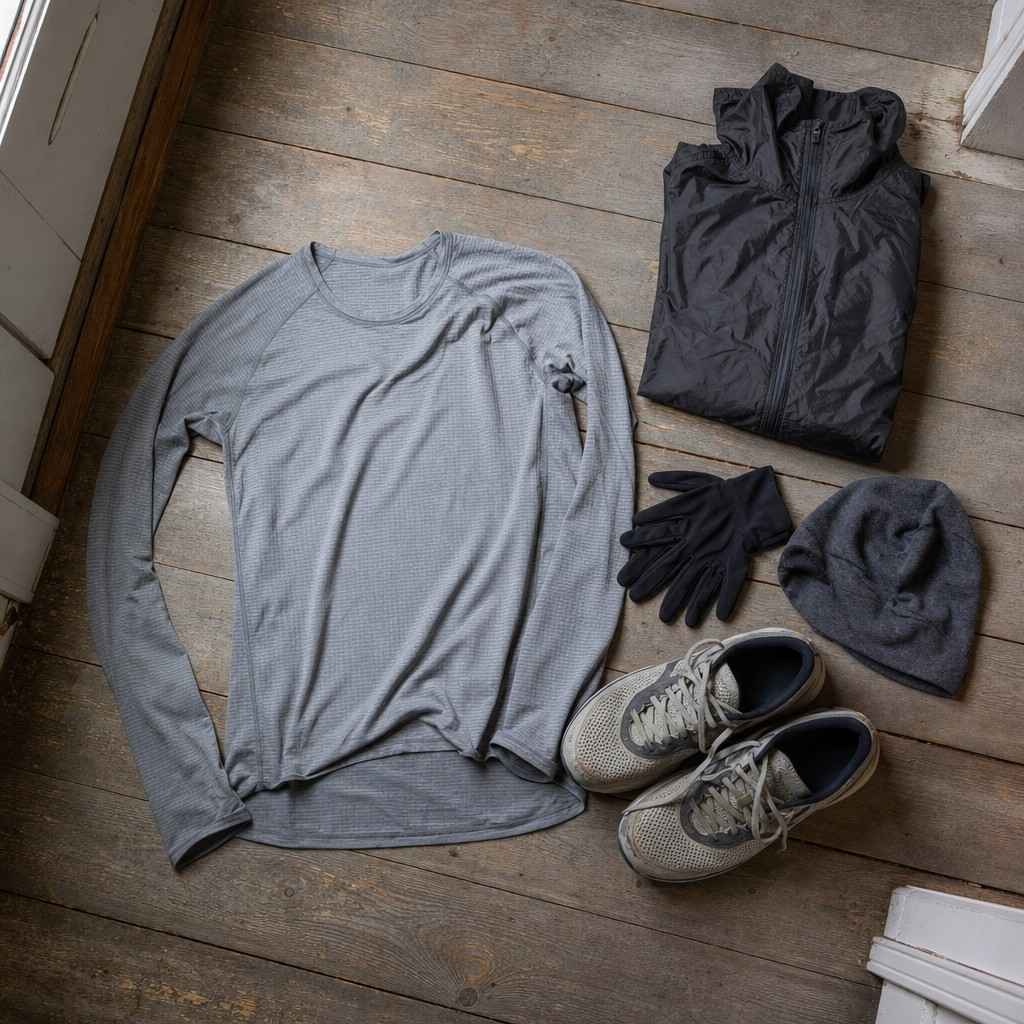
New runners dress for standing still. Running generates significant body heat within the first ten minutes. By the time you reach the end of your street, a thick fleece that felt sensible at the door has become a problem.
Running coaches use a rough rule: you will feel ten to fifteen degrees warmer when you are moving than when you are standing still. If you are comfortable at the front door, you will be too hot within ten minutes.
Dress for the second kilometre, not the first thirty seconds. You will feel cold for about three minutes at the start. That is the correct experience. It means you are dressed right.
What British weather is actually like
British weather is not extreme. It is grey and damp. The practical range for most outdoor running in England and Wales sits between roughly two and sixteen degrees across the year.
According to the Met Office, the UK receives around 156 days of rainfall per year. What varies is wind and moisture, not significant temperature swings.
Grey and consistent is good news for runners. No frozen winters to navigate and no oppressive summer heat most years. Drizzle and a mild ceiling are easier to dress for than continental extremes.
What to wear in the four UK conditions

Base layer first, always. A moisture-wicking technical top against the skin handles most of the British running year on its own.
For light rain or overcast days, which cover most of the year, a base layer and nothing else on top is enough. On a run under forty-five minutes, a waterproof jacket adds unnecessary weight. The base layer will dampen slightly and dry as you warm up.
For persistent rain, add a lightweight packable waterproof jacket over the base layer. The aim is to stay comfortable, not dry.
For cold dry mornings below five degrees, add a windproof top over the base layer. Gloves and a thin hat make a significant difference in wind and can go in a pocket after fifteen minutes if you warm up quickly.
For summer above sixteen degrees, a technical T-shirt instead of cotton. Cotton holds sweat against the skin and becomes cold and heavy once wet.
One base layer covers most of the year. The jacket covers the rest.
The one item worth buying
Running shoes fitted at a proper running shop are the most important investment overall, and what you need to get started covers the fitting process.
A lightweight waterproof running jacket is the single most useful purchase for running in British conditions. It does not need to be expensive. Look for breathable fabric and a packable design that fits in one hand and does not restrict your arm movement. This covers roughly eighty per cent of British running conditions.
You can compare lightweight waterproof running jackets on Amazon UK to get a sense of the range. Still try before buying where possible.
When not to run
Rain alone is never a reason to stay in. Wind is uncomfortable but manageable. Dark mornings are manageable with a high-visibility layer or a head torch.
Ice and frost are the genuine exception. A frozen pavement is a real hazard. Even parkrun cancels events in icy conditions, and that is a reliable prompt: if it is off, the pavements are probably not safe.
If you are in your fifties or sixties, recovery and warm-up take longer than they used to. Walking the first five minutes before your running intervals is especially worthwhile in winter.